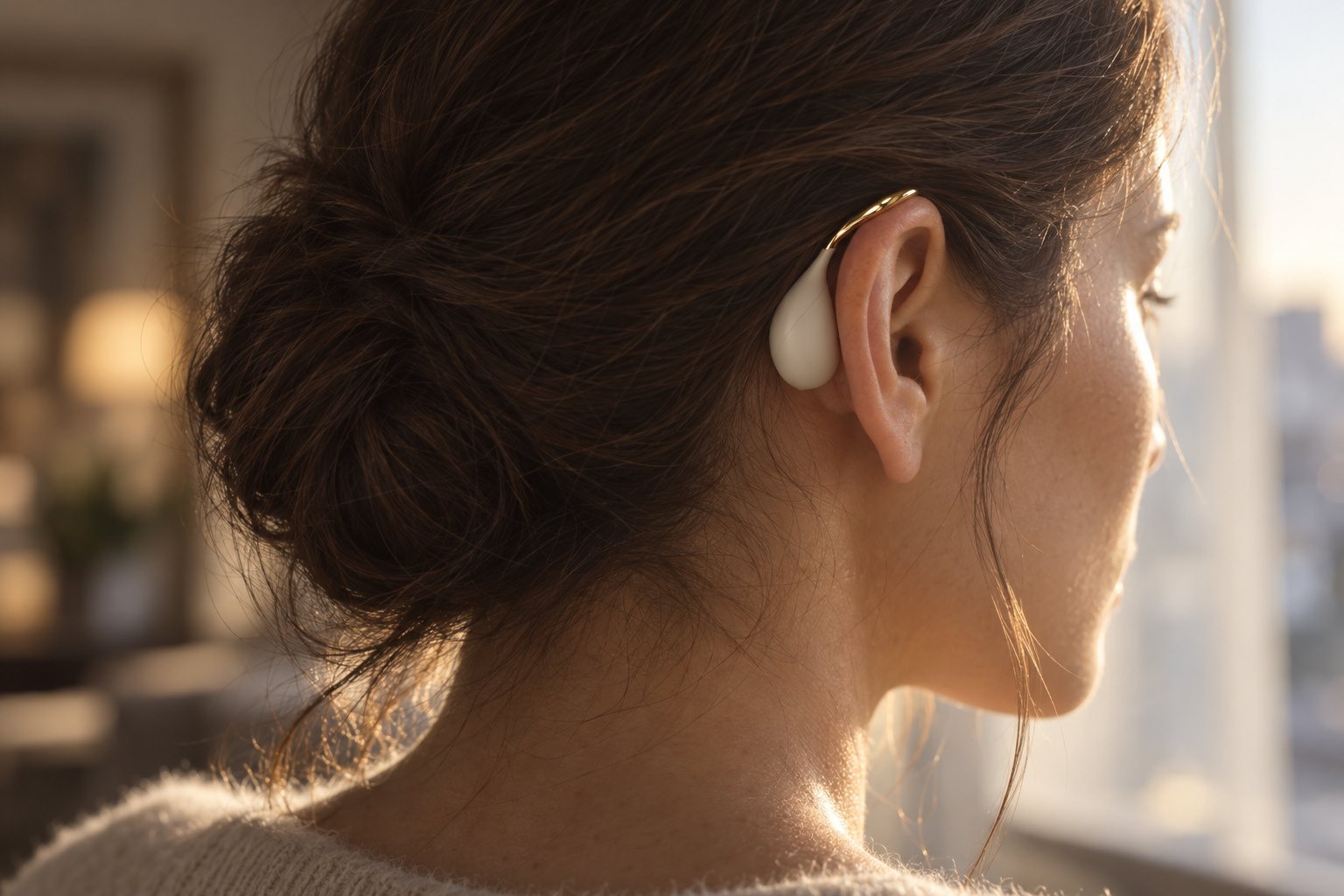
Let your jaw go.

A wearable for teeth grinding and clenching.

↓

1 in 4

adults tense or grind their jaw during the day.

Journal of Clinical Medicine, 2024 ↗

Most people find out too late,
after irreversible damage.

A wearable solution to teeth grinding

01

Detect

The cuff senses the moment your jaw tightens, during the day and through the night.

On callsDrivingDeep focusPractice
02

Release

A gentle tap reminds you to let go, quiet enough that it does not wake you at night.
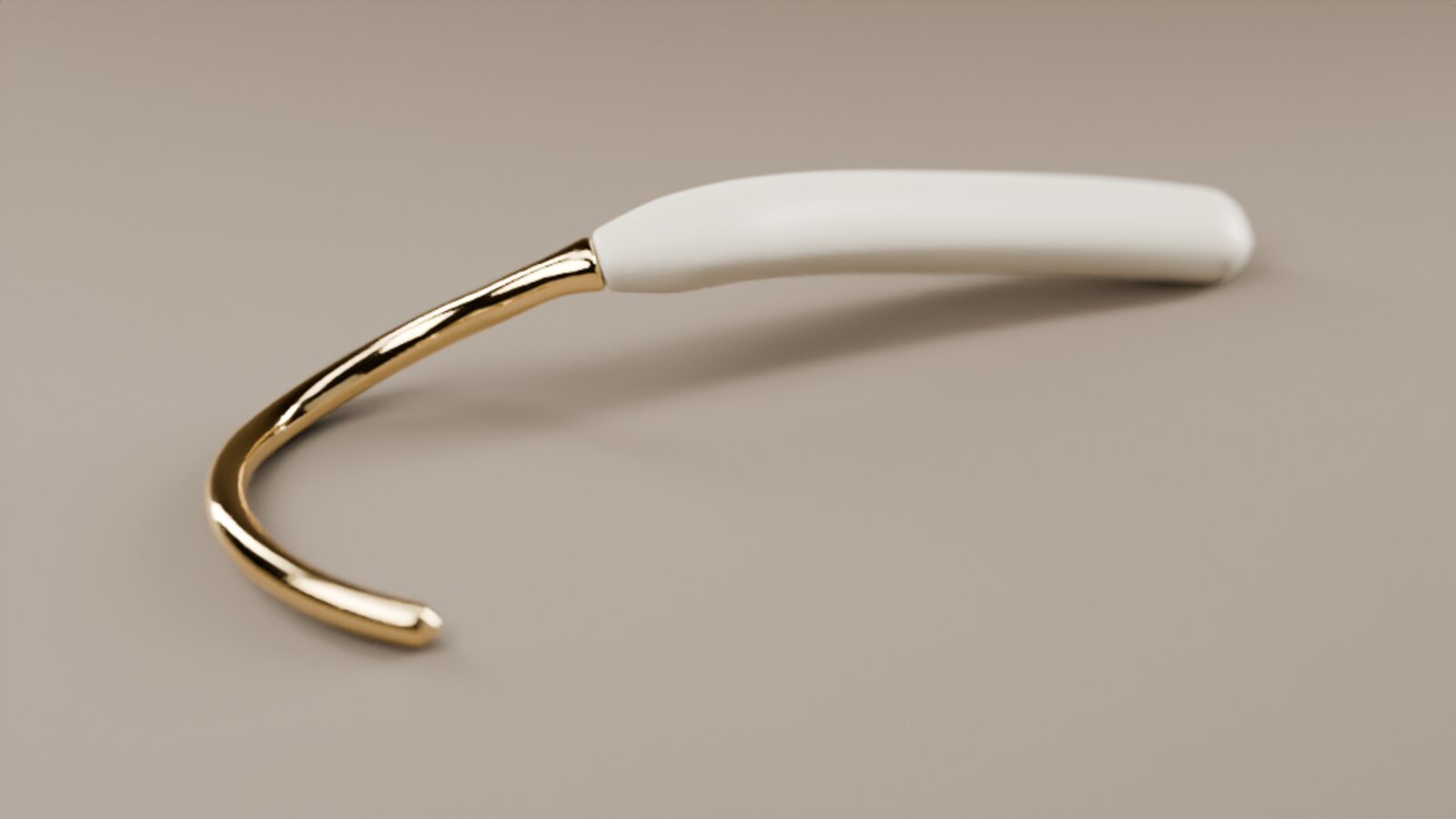
The nou cuff: a thin gold arc that hooks over the top of the ear, joined to a slim ivory pod that rests behind it.
Design render. The final shape is still changing.

Worn like jewelry. Built to help you.

  • A gold arc on the ear. It sits along the top of the ear the way an ear cuff does. No piercing.
  • A pod behind it. The sensor and battery sit out of sight, against the jaw muscle above and behind the ear.
  • A quiet tap. No sound and no screen. You feel it, nobody else does.
  • Day and night. We are shaping the pod to lie flat for side sleepers, and testing it on ourselves first.

The idea already works.

Feedback timed to jaw muscle activity has been studied for over a decade. In clinical trials, the jaw responds.

Studies using gentle vibration, the cue nou uses, found fewer and shorter episodes too. nou brings it to a cuff you can wear day and night.

52%

fewer jaw muscle episodes during sleep while feedback was on

Randomized trial, Acta Odontologica Scandinavica, 2013

10 to 3

grinding episodes a night after 12 weeks of vibration feedback

Pilot study, Journal of Biomedical Research, 2015

Sleep stays intact. In an overnight sleep-lab study, total sleep, deep sleep and awakenings did not change with the feedback on. European Journal of Oral Sciences, 2011

Everyday triggers. Stress, caffeine and heavy drinking each went with more clenching at night, in a study of 13,057 people. Chest, 2001

Musicians. 1 in 2 string and wind players report jaw trouble, rising with hours of practice. Journal of Oral Rehabilitation, 2021

All references
  1. 2024Zieliński, Pająk and Wójcicki, global prevalence of bruxism, day and night. Journal of Clinical Medicine
  2. 2021Campos et al., jaw problems in musicians, 13 studies pooled. Journal of Oral Rehabilitation
  3. 2019International guidelines for using feedback devices for jaw activity. Journal of Oral Rehabilitation
  4. 2019Nakamura et al., vibration timed to jaw activity during sleep, pilot study. Sleep and Breathing
  5. 2015Gu et al., wireless vibration feedback for sleep bruxism compared with a splint, pilot study. Journal of Biomedical Research
  6. 2014Randomized pilot of feedback timed to jaw activity, effect after treatment. Oral Surgery, Oral Medicine, Oral Pathology and Oral Radiology
  7. 2013Jadidi et al., feedback timed to jaw activity during sleep, randomized trial. Acta Odontologica Scandinavica
  8. 2011Overnight sleep study with feedback timed to jaw activity. European Journal of Oral Sciences
  9. 2001Ohayon, Li and Guilleminault, 13,057 people, risk factors for night grinding. Chest

Be among the first to wear nou.

Join the waitlist